
From a new capital to a royal complex
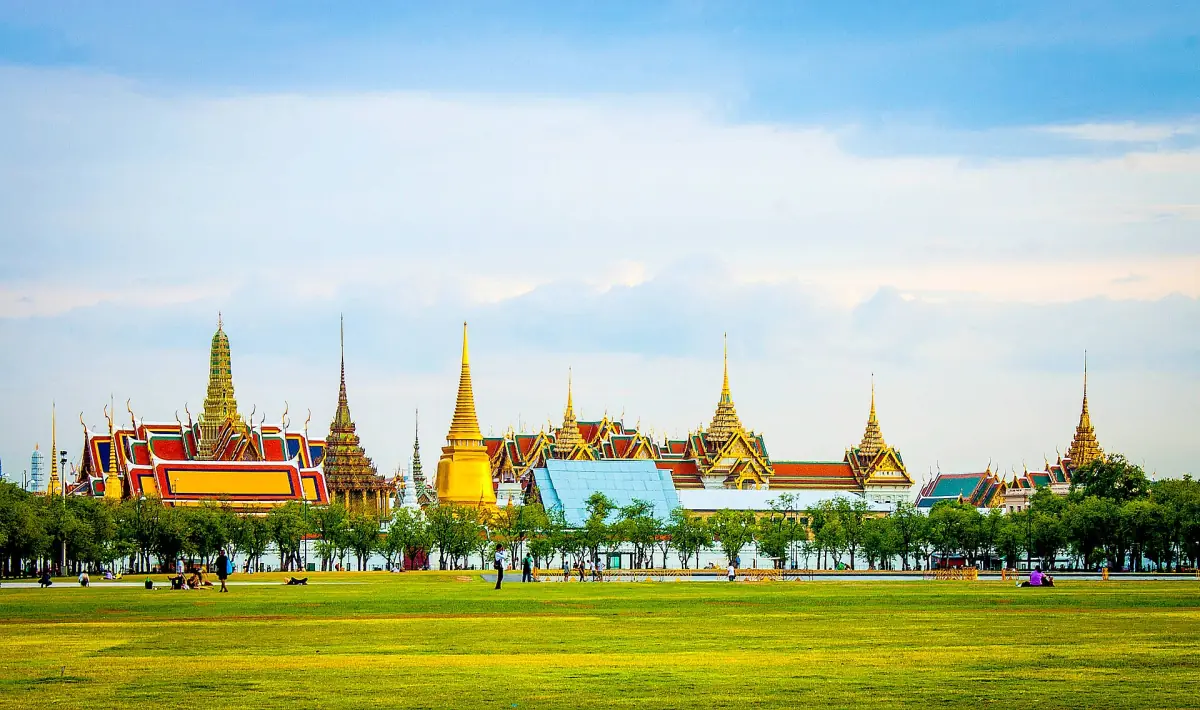
The history of the Grand Palace starts with a city. In 1782 King Rama I moved the capital to the east (left) bank of the Chao Phraya and had the palace laid out as a royal residence and a centre of government. If you want to hear this story on the spot, a guided visit helps, and our overview of Grand Palace tours shows what is on offer.
The palace was not built in one go. Work began with the foundation of the city in 1782 to 1783, and later reigns added halls, courts and temples. That is why no single year describes the whole complex. Its buildings come from different periods and different tastes.
The main stages of the palace
From the first reign to the late 19th century.
1782: the move to Rattanakosin
Rama I shifted the capital across the river from Thonburi. The palace stood at the heart of the new city, with residence, offices and a royal chapel inside one precinct.
The first halls
The Dusit Maha Prasat dates from Rama I. It has a cross-shaped plan in Thai style and was traditionally also used as a hall for lying in state.
Architecture of the halls →The older residential group
The Phra Maha Monthien group, with the halls Chakraphat Phiman, Phaisan Thaksin and Amarin, belongs to the older residential area. It is linked to the tradition that a king spends a night there after the coronation.
1876 to 1882: the Chakri Maha Prasat
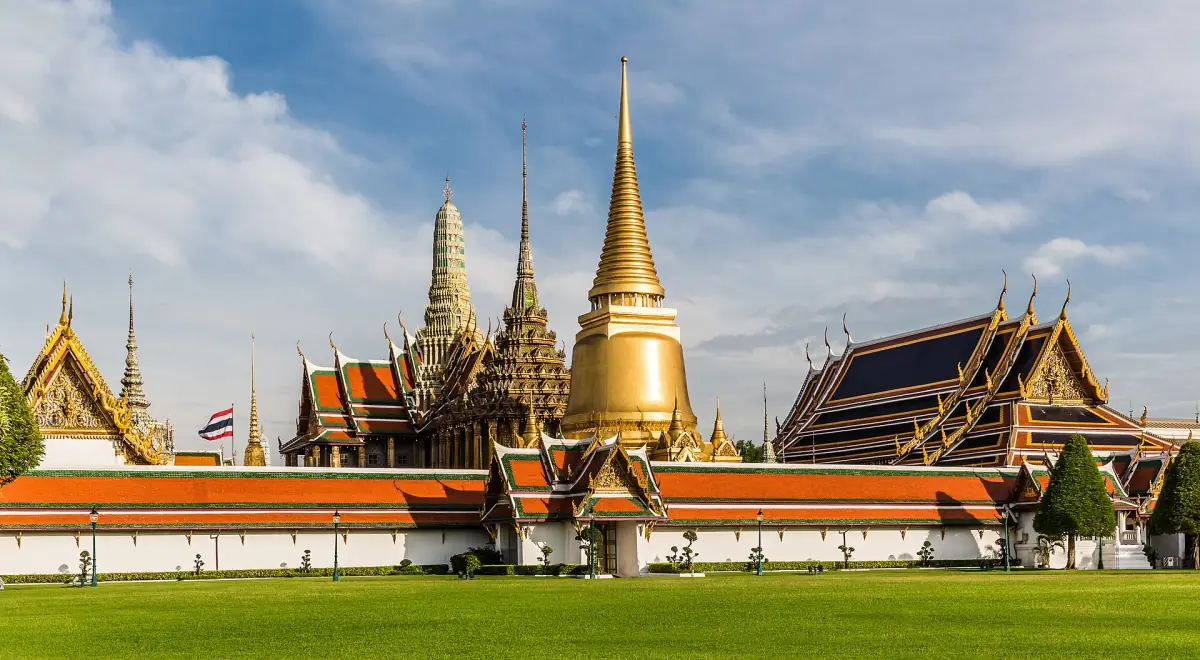
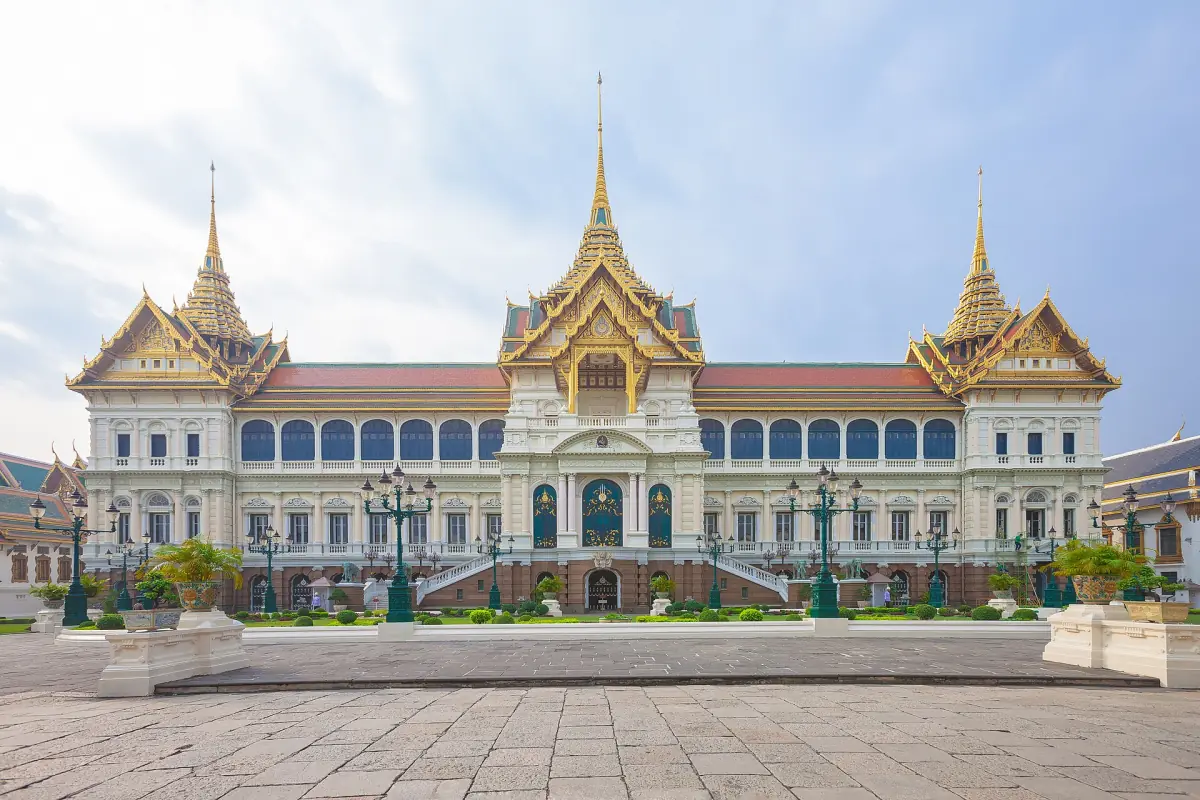
The main throne hall was built under Rama V. It combines a European-influenced lower part with Thai roofs and gilded spires, which gives the skyline its recognisable outline.
Late 19th century: a residence in the north
Rama V had a residential complex built to the north, in the Dusit area. The move away from the old palace was a gradual development, not a single change of address.
Our pick: palace and old town
The old town around the palace is where much of this history happened.
Hand-picked tours, booked through GetYourGuide. Prices are indicative starting prices in US dollars (as of October 2026). Tap a tour for live availability and the current price in your currency.
Grand Palace tours and temple walks
Guided visits to the Grand Palace, Wat Phra Kaew, Wat Pho and Wat Arun, with live prices and availability.
Rattanakosin and the river
The palace stands on Na Phra Lan Road in the Phra Nakhon district, in the area called Rattanakosin. This is the old royal core of Bangkok on the east bank. The older settlement of Thonburi lay on the other side of the river, and the two should not be mixed up.
Two neighbours show how close the old city stands to the palace. Wat Pho lies just to the south and is a temple in its own right. Wat Arun rises on the Thonburi bank opposite. Both have their own admission and are not part of the palace ticket.
Wat Phra Kaew: the royal chapel
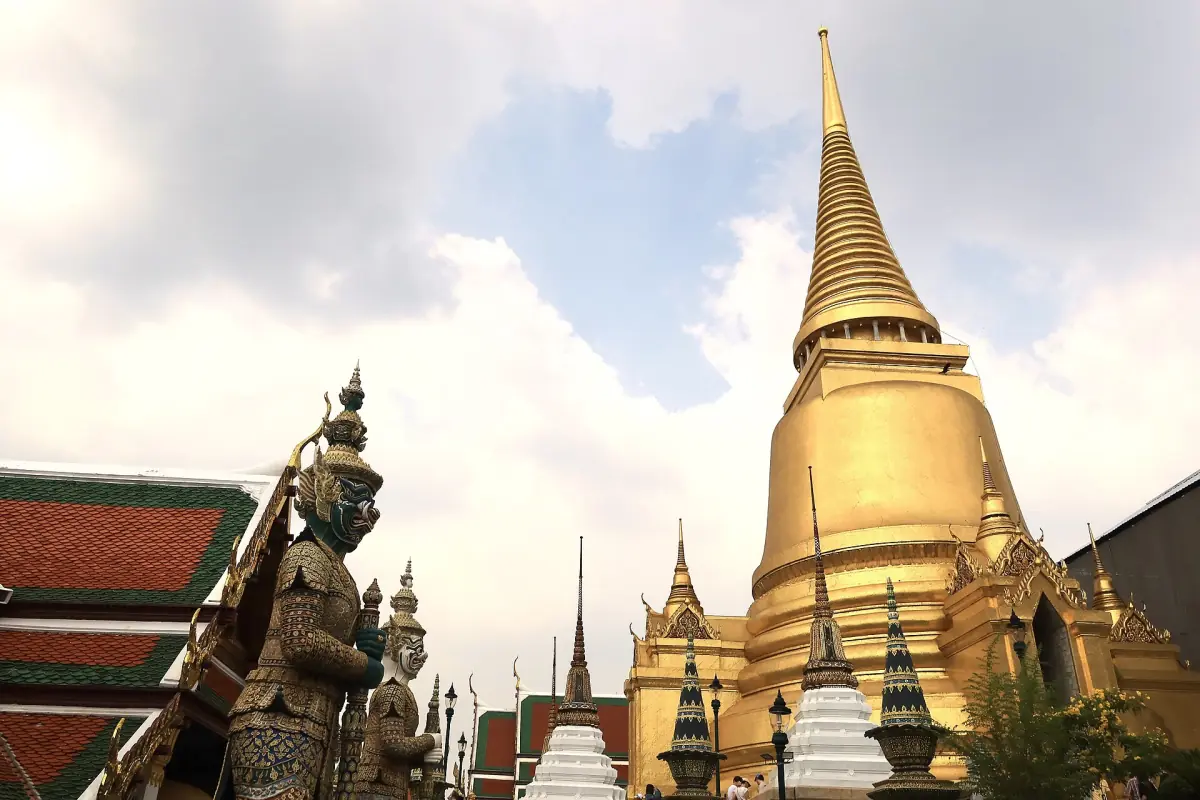
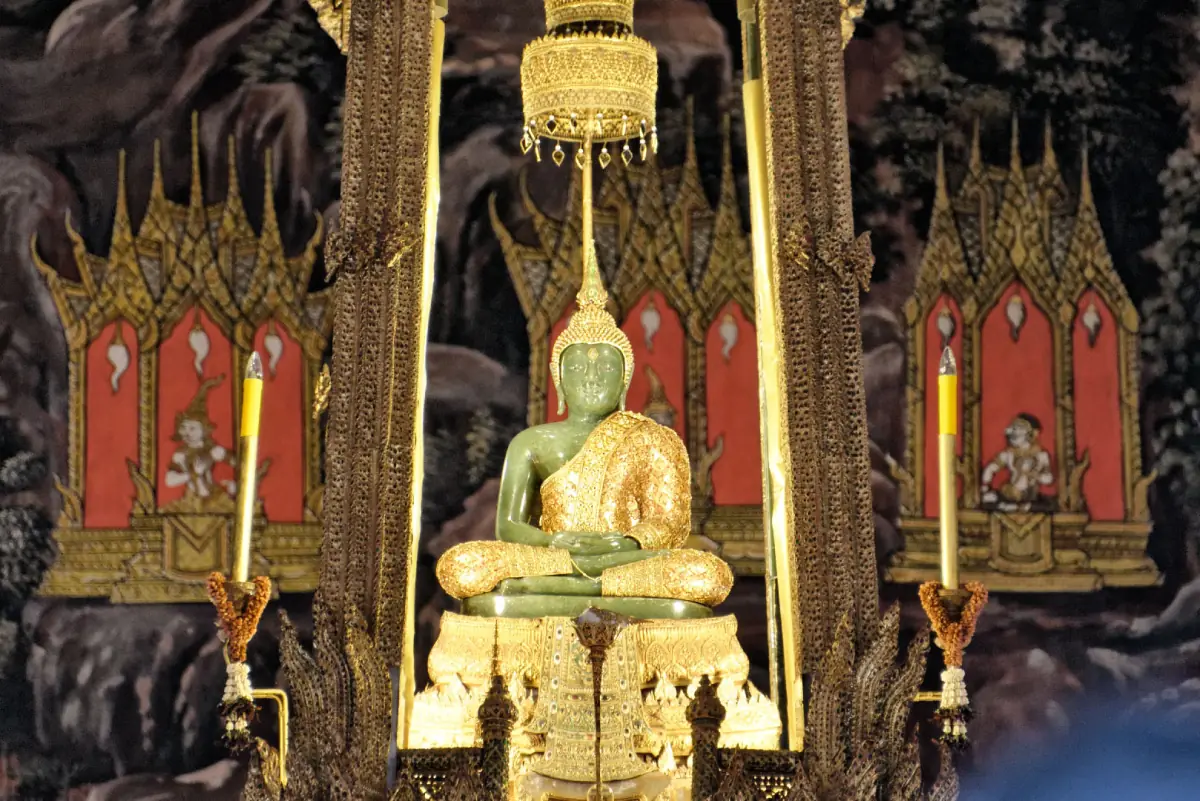
Wat Phra Kaew is the common name of the royal chapel inside the palace walls. Its formal name is Wat Phra Sri Rattanasasadaram. It was laid out without monks' quarters, so no community of monks lives there. It is the royal chapel of the palace.
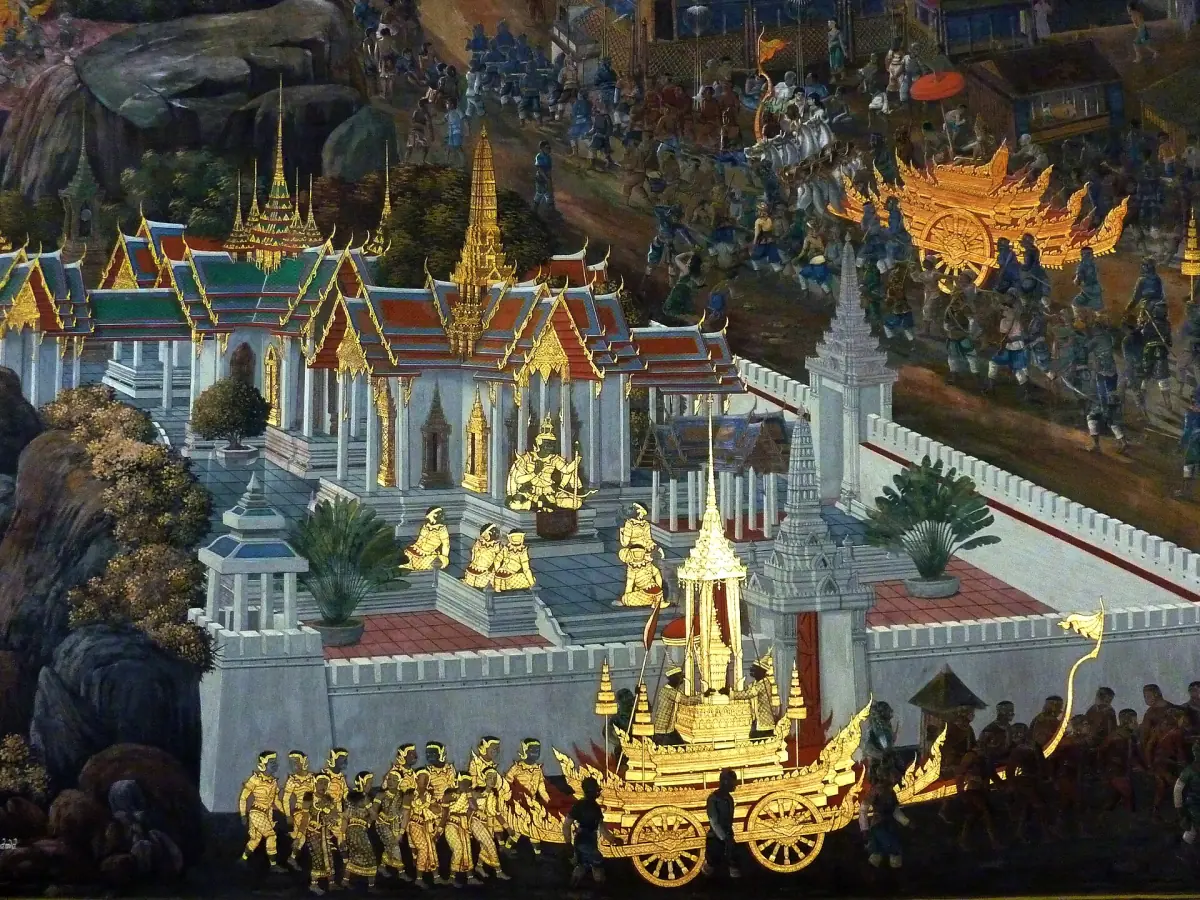
The galleries around the temple carry the Ramakien murals, the Thai version of the Ramayana. Our page on the Emerald Buddha and Wat Phra Kaew covers the temple in detail.
Dusit Maha Prasat and Dusit Palace are different places
Two names cause confusion. The Dusit Maha Prasat is a throne hall inside the Grand Palace. The Dusit area, with its later residential buildings, lies further north in the city. The same name appears in both places, but they are separate sites with separate histories.
Early court life also looked different from today. Residence and administration shared the precinct. That is a historical picture and should not be applied to the present day.
The palace today
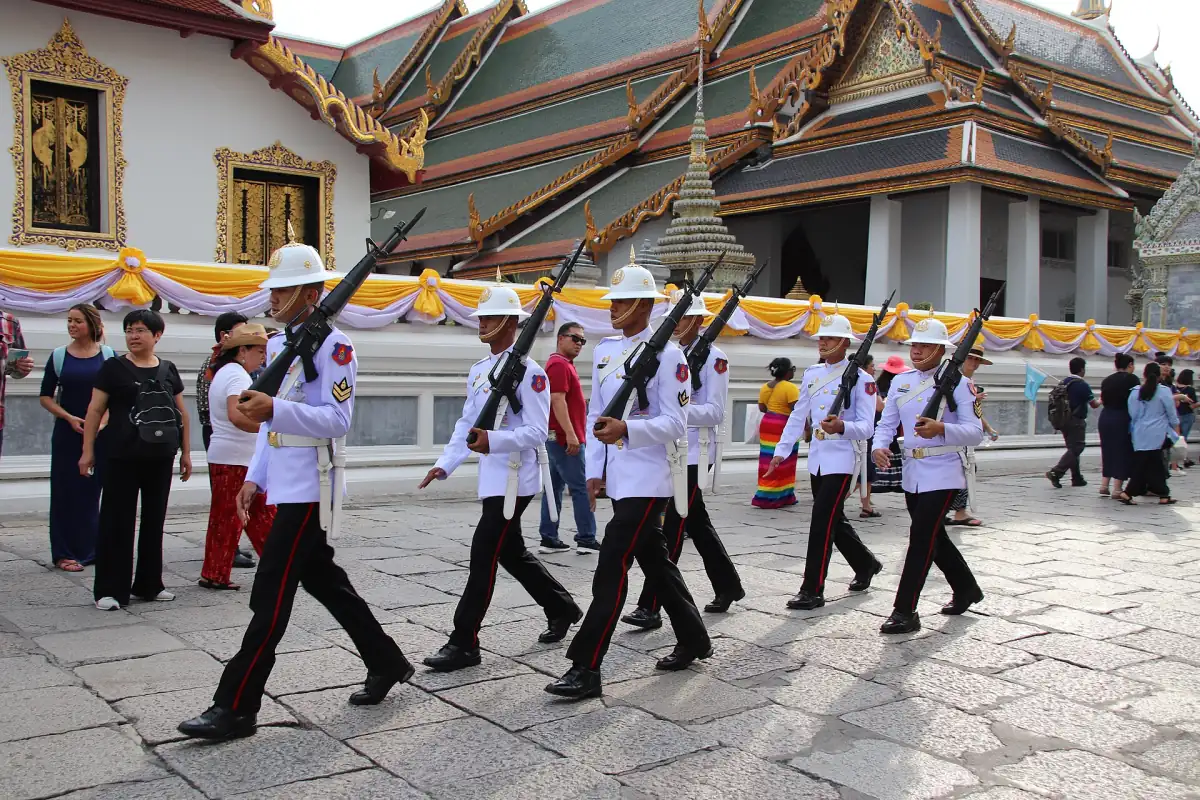
The Grand Palace is a historic royal residence and is still used for royal ceremonies. For visitors this has practical effects. You enter through the Mani Nopparat Gate and pass a security check. The Dusit Maha Prasat has been closed to normal sightseeing, and visitor routes changed on 21 February 2026.
Ceremonies can change opening times, so check the palace calendar before you go. Our page on opening hours and closure notices explains what to look for.
Grand Palace history: frequently asked questions
Who founded the Grand Palace?
King Rama I. He moved the capital to the east bank of the Chao Phraya in 1782 and had the palace laid out as a royal residence and centre of government.
When was the Grand Palace built?
Work began with the founding of the city in 1782 to 1783. Later reigns added buildings, for example the Chakri Maha Prasat in 1876 to 1882 under Rama V. The complex has no single completion date.
Do kings live in the Grand Palace today?
It is a historic royal residence and is used today among other things for ceremonies. Visitors see the parts that are open to the public, not private quarters.
What is the difference between Rattanakosin and Thonburi?
Rattanakosin is the old royal core on the east bank, where the Grand Palace stands. Thonburi was an earlier settlement on the opposite bank.
Is this the official Grand Palace website?
No. This is an independent visitor guide. It is not run by the palace, the Bureau of the Royal Household, the Tourism Authority of Thailand or any tour operator. Check the palace's own calendar for current times.